








What Is IPTV? The 2026 Ultimate Guide to How It Works | IPTVUSAx
ULTIMATE GUIDE 2026
Happy family discovering what is IPTV and streaming live sports on a 4K TV

What Is IPTV and How Does It Work? The 2026 Ultimate Technical Guide

📡 Quick answer: What Is IPTV? It stands for Internet Protocol Television – a system where television content is delivered over an IP network (the same as your internet connection) instead of traditional terrestrial, satellite, or cable formats. This guide unpacks every layer: from the evolution of broadcasting to protocols like IGMP, HTTP Live Streaming, CDN architecture, and how IPTVUSAx delivers 4K World Cup matches with zero lag.

1. The Evolution of Television: From Analog to Digital to IP

Television broadcasting has undergone three major technological shifts. The first generation – analog terrestrial (NTSC, PAL, SECAM) – transmitted video as continuous radio waves. It was susceptible to interference and offered limited channels. Then came digital broadcasting (DVB-T, ATSC) around the late 1990s, which compressed video using MPEG-2, improving quality and spectrum efficiency. However, both systems remained “broadcast” – one-way, scheduled, and geographically constrained.

The real turning point arrived with the proliferation of broadband internet. Engineers realized that by using Internet Protocol (IP) packets, they could turn TV into an on-demand, two-way interactive service. That's the birth of what we now call IPTV. According to Cisco's IPTV solution whitepaper, IPTV relies on private managed networks (or sometimes the public internet) to deliver multicast video streams with quality-of-service guarantees. Today, over 60% of American households use some form of internet-delivered TV, and by 2026, IPTV and OTT combined will surpass traditional cable.

2. What Is IPTV? A Deep Technical Definition

At its core, what is IPTV? It's a system where television services are delivered using the Internet Protocol suite over a packet-switched network (like a LAN or the internet), instead of being delivered through traditional satellite signals, cable TV formats, or terrestrial over-the-air broadcasts. To fully understand what is IPTV, you must know that IPTV content is often delivered as a continuous stream encoded in H.264 or HEVC (H.265) and encapsulated in MPEG-TS or MP4 segments.

Unlike downloaded media (where you wait for a full file), IPTV streams live or on-demand content in real-time. The key differentiator from "over-the-top" (OTT) services like Netflix is that IPTV traditionally runs on a managed, dedicated network (e.g., a telco's walled garden) that guarantees bandwidth and low latency. However, modern providers such as IPTVUSAx have bridged the gap by using enterprise-grade Content Delivery Networks (CDNs) and adaptive bitrate streaming to deliver near-perfect quality over the public internet.

Did you know? The first commercial IPTV service launched in 1994 by Precept Software (later acquired by Cisco). By 2026, global IPTV subscribers will exceed 350 million, with North America growing at 12% annually.

3. The Architecture of IPTV (How It Works)

Understanding how IPTV works requires dissecting four core components: the Head-end, CDN (Content Delivery Network), Middleware, and the Client Device. Let's explore each in depth – this is where you truly see what is IPTV from a technical standpoint.

Detailed infographic explaining how IPTV works from content acquisition to CDN delivery and playback on user devices
Figure 1: Complete IPTV delivery chain – from head-end to CDN to your screen. This visual answers what is IPTV infrastructure.

3.1 Head-end (Super Headend & Video Headend)

The head-end is the content ingestion and processing facility. It receives live feeds from satellites, fiber, or local encoders. It then transcodes video into efficient formats (H.265 for 4K) and encrypts the streams using DRM (Digital Rights Management). The head-end also manages Electronic Program Guide (EPG) data and schedules.

3.2 Content Delivery Network (CDN)

Once the stream is encoded, it's replicated across geographically distributed CDN nodes. When a user requests a channel, the nearest CDN edge server delivers the stream, reducing latency and avoiding congestion. For live events like the World Cup 2026, CDNs use multicast ABR (Adaptive Bitrate) to dynamically adjust quality based on the user's bandwidth. IPTVUSAx's channel lineup relies on a global CDN with points-of-presence in 15 US cities.

3.3 Middleware

Middleware is the "operating system" of IPTV. It manages user authentication, EPG, subscription plans, parental controls, and interactive features (pause/rewind live TV). When you log into your IPTV app, the middleware fetches your personalized channel list and presents the UI.

3.4 Client Device & App

Finally, the end-user device – a Firestick, Smart TV, Android box, or dedicated MAG decoder – runs an IPTV player app (like TiviMate, Smarters, or a custom app). The app sends HTTP or RTSP requests to the middleware, receives an M3U playlist or Xtream Codes API, and then streams video using a player engine (ExoPlayer, VLC). The IPTVUSAx installation guide walks you through setting up these apps in under 5 minutes.

4. Protocols Deep Dive: IGMP, RTSP, HLS, UDP and More

The magic of IPTV lies in the network protocols that carry video across the internet. Here's a technical breakdown – and why what is IPTV cannot be answered without mentioning these protocols.

ProtocolRole in IPTVWhy It Matters
IGMP (Internet Group Management Protocol)Manages multicast group membership. A user signals "I want to watch ESPN" → the router joins the multicast group for that channel.Essential for live IPTV; saves bandwidth by sending one stream to many users.
RTSP (Real Time Streaming Protocol)Used for VOD and time-shifted TV (pause/rewind). It controls the stream like a remote controller: PLAY, PAUSE, SEEK.Allows interactive control of video playback.
HLS (HTTP Live Streaming) – developed by AppleBreaks video into 2-10 second .ts or fMP4 segments delivered over HTTP. Adaptive bitrate switching per segment.Most common for IPTV over public internet; works through firewalls. IPTVUSAx uses HLS for 99.9% reliability.
UDP + RTPUsed in traditional managed IPTV networks (ISP-provided). Low overhead but no error correction.Ideal for fiber-to-the-home where packet loss is near zero.
HTTP/2 & QUICEmerging protocols for faster connection establishment and multiplexing.Reduces latency for live sports; used by advanced CDNs.

Providers like IPTVUSAx combine HLS with custom buffering algorithms to achieve sub‑second channel zapping and no lag during 4K broadcasts. The choice of protocol directly impacts user experience.

5. Categories of IPTV: VOD, Live IPTV, Time-Shifted TV

IPTV isn't just "live TV over internet". It encompasses three distinct service models – each answering the question what is IPTV capable of doing:

  • Live IPTV: Real-time streaming of scheduled broadcasts (news, sports, events). Uses multicast or low-latency HLS.
  • Video on Demand (VOD): Large library of movies/series that users can start, pause, or resume. Stored on CDN storage nodes.
  • Time-Shifted TV (Catch-up / Start-over): Allows viewers to watch a program that aired hours or days ago. The IPTV provider records every channel 24/7 on cloud DVR.
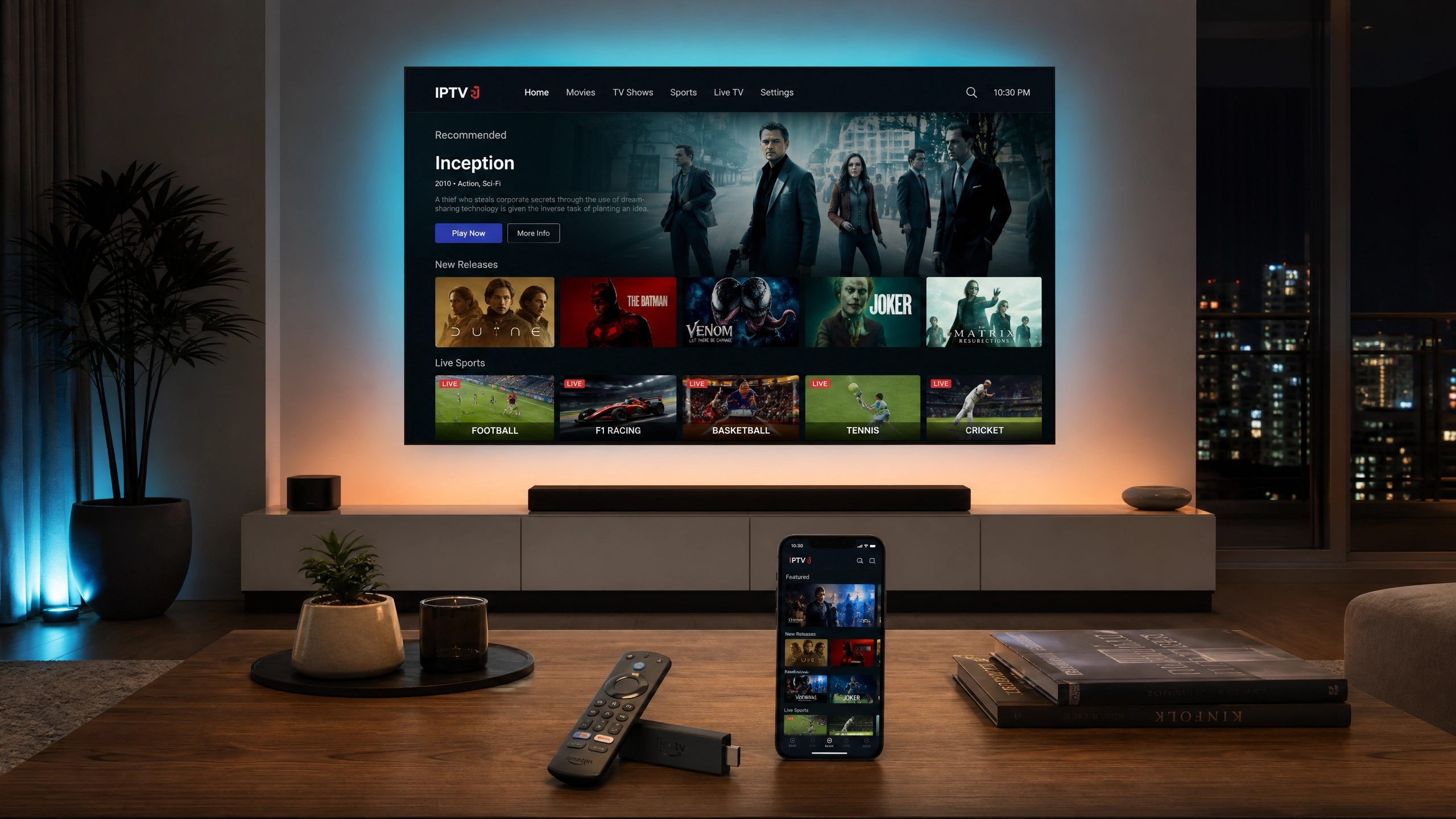
Premium IPTV interface in red and white theme showing live World Cup 2026 matches and a library of 140,000+ VOD titles
IPTVUSAx interface: live World Cup 2026 matches + massive VOD catalog – a real‑world example of what is IPTV in action.

Many premium services, including IPTVUSAx pricing plans, bundle all three categories with 140,000+ VOD titles and 7‑day catch-up for major channels.

6. IPTV vs. Cable, Satellite, and OTT (Netflix)

📡 Cable TV

Delivers QAM modulated signals over coaxial cable. Offers linear channels but limited interactivity. Requires set-top box rental. Lacks on-demand flexibility unless bundled with separate VOD.

🛰️ Satellite

Uses DVB-S2, requires a dish. Vulnerable to weather. Higher latency; no upstream for interactive apps (unless using phone line).

☁️ OTT (Netflix, Hulu)

Delivered over the open internet, no managed QoS. Content is strictly on-demand with no live linear channels (except some hybrid services). Uses HTTP adaptive streaming only.

📱 IPTV (Managed & Public)

Managed IPTV offers QoS; public IPTV (like IPTVUSAx) uses premium CDNs. Combines live, VOD, catch-up. Supports EPG, recording, multi‑view.

According to the FCC broadband reports, IPTV's biggest advantage is bandwidth efficiency – a single multicast stream serves thousands of viewers, whereas OTT requires individual unicast streams. That's why live events like the Super Bowl are often delivered via IPTV backbones. Once you grasp what is IPTV, the superiority over legacy systems becomes clear.

7. Bandwidth & Networking: Requirements for 4K and 8K in 2026

The sweet spot for HD IPTV is 5-8 Mbps. For 4K HDR (HEVC), you need at least 25 Mbps. 8K (coming with AV1 codec) will demand 50+ Mbps. IPTVUSAx uses dynamic adaptive streaming that automatically downgrades to 1080p if your connection wavers – ensuring zero freezing.

Latency matters: for live sports, sub‑5 seconds is acceptable; for interactive applications, sub‑1 second requires low-latency HLS (LL-HLS) or WebRTC. The global shift to fiber-to-the-home (FTTH) and DOCSIS 4.0 will make 8K IPTV mainstream by late 2026.

Pro tip: Before subscribing to any IPTV service, run a speed test. For 4K streaming, ensure your ISP provides consistent low jitter and packet loss (<1%). Start a free trial to test compatibility with your home network.

8. Hardware & Software Hub: Firestick, Android Boxes, MAG, Smart TVs

To enjoy IPTV, you need a device that can decode H.265/HEVC, run a player app, and connect to your network. Popular choices:

  • Amazon Fire TV Stick 4K (2nd Gen & 3rd Gen): Most popular due to low cost ($35-$55), Wi‑Fi 6 support, and easy sideloading of IPTV apps. Our installation guide covers Firestick setup in 3 minutes.
  • NVIDIA Shield TV Pro: High-end, AI upscaling, Gigabit Ethernet – best for 8K streaming.
  • MAG Devices (Infomir): STB with dedicated Linux firmware; used by many European IPTV providers because of quick boot and EPG integration.
  • Android TV boxes (Formuler, BuzzTV): Offer custom middleware (MyTVOnline) with advanced recording features.
  • Smart TVs (Samsung/LG): Native IPTV apps available via their app stores; requires Wi‑Fi or Ethernet.

Software-wise, the most robust IPTV players are TiviMate (Android TV), Smarters Pro (iOS/Android), and IBO Player. All are compatible with IPTVUSAx using M3U URL or Xtream Codes API.

9. World Cup 2026: How IPTV Is Revolutionizing Global Sports Broadcasting

Global map with a stadium hub showing how IPTV is revolutionizing sports broadcasting for the World Cup 2026 with ultra-low latency
World Cup 2026 IPTV infrastructure: low-latency delivery to every continent – a perfect use case for what is IPTV doing at scale.

The FIFA World Cup 2026 will be the largest‑scale test for IPTV infrastructure. With 104 matches, broadcasters will rely on cloud‑native IP workflows to deliver 4K HDR feeds to billions of devices. Traditional satellite distribution has latency up to 20 seconds; IPTV using LL-HLS can bring that down to 2-3 seconds – essential for real‑time sports betting and social media engagement.

IPTVUSAx has already deployed 4K World Cup test channels, and subscribers can access all matches via dedicated sports categories. The ability to pause, rewind, or start from beginning makes IPTV superior to conventional broadcasts. Start your free trial before June 2026 to experience the tournament live.

Conclusion: The Future of IPTV in 2026 and Beyond

Understanding what is IPTV and its underlying protocols, hardware, and network architecture is essential for any cord‑cutter or tech enthusiast. From the head‑end to CDN to your Firestick, IPTV delivers a superior TV experience – more control, better quality, and global access. As fiber optics and 5G roll out, IPTV will become the default standard for all video consumption. Providers like IPTVUSAx are at the forefront, offering massive channel lineups, 4K sports, and a risk‑free trial to test the technology yourself.

Still wondering what is IPTV and whether it fits your lifestyle? The answer is simple: IPTV is the present and future of television. Ready to cut the cord? Browse our pricing plans and join the revolution.

11. Frequently Asked Questions (FAQ) – What Is IPTV?

What exactly is IPTV?
What is IPTV? In short, it's Internet Protocol Television – a method of delivering television content over IP networks (internet) instead of traditional cable or satellite.
Is IPTV legal in the USA?
IPTV technology is legal. Using a service like IPTVUSAx that has proper licenses is completely lawful. Avoid unverified free services that stream pirated content.
What internet speed do I need for IPTV 4K?
For stable 4K streaming, you need at least 25 Mbps download speed, low latency (<30 ms), and a wired ethernet or 5GHz Wi-Fi connection.
Can I watch IPTV on multiple devices at home?
Yes, most premium IPTV providers including IPTVUSAx allow up to 5 simultaneous connections on one subscription, perfect for family use.
Do I need a VPN for IPTV?
Not mandatory, but a VPN can prevent ISP throttling and enhance privacy, especially for live sports events like the World Cup.
How do I set up IPTV on Firestick?
Install an IPTV player (e.g., TiviMate) from the Amazon Appstore or sideload it, then add your M3U URL from your provider. Full guide here.
IPTVusax Footer
Scroll to Top